
Spring/Summer 2026 Market Outlook

Building Momentum in a
Moving Market
The construction market has moved beyond the extreme volatility of the post-pandemic period, but it
has not moved into an easy or inexpensive environment. Demand remains strongest in infrastructure,
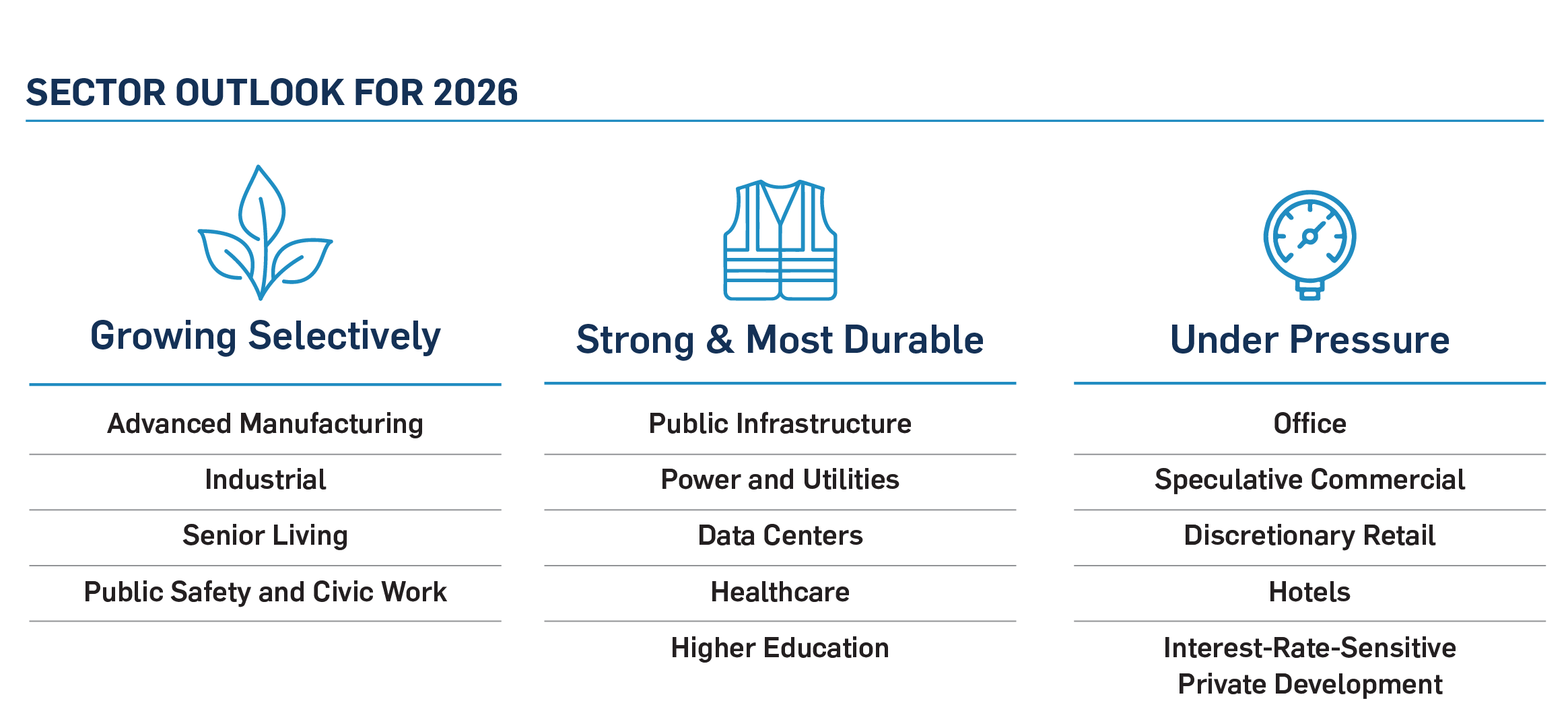
healthcare, higher education, power, advanced manufacturing, and mission-critical work, while office, speculative commercial, and interest-rate-sensitive private development continue to face pressure.
1. SETTING THE STAGE
Selective Strength Is Defining the Market
The 2026 construction market is active, but it is not moving evenly. Some sectors continue to carry significant momentum, while others are slowing or becoming more selective. AIA’s January 2026 Consensus Construction Forecast describes the year as one shaped by slowing growth, widening sector imbalances, and continued uncertainty in nonresidential construction.
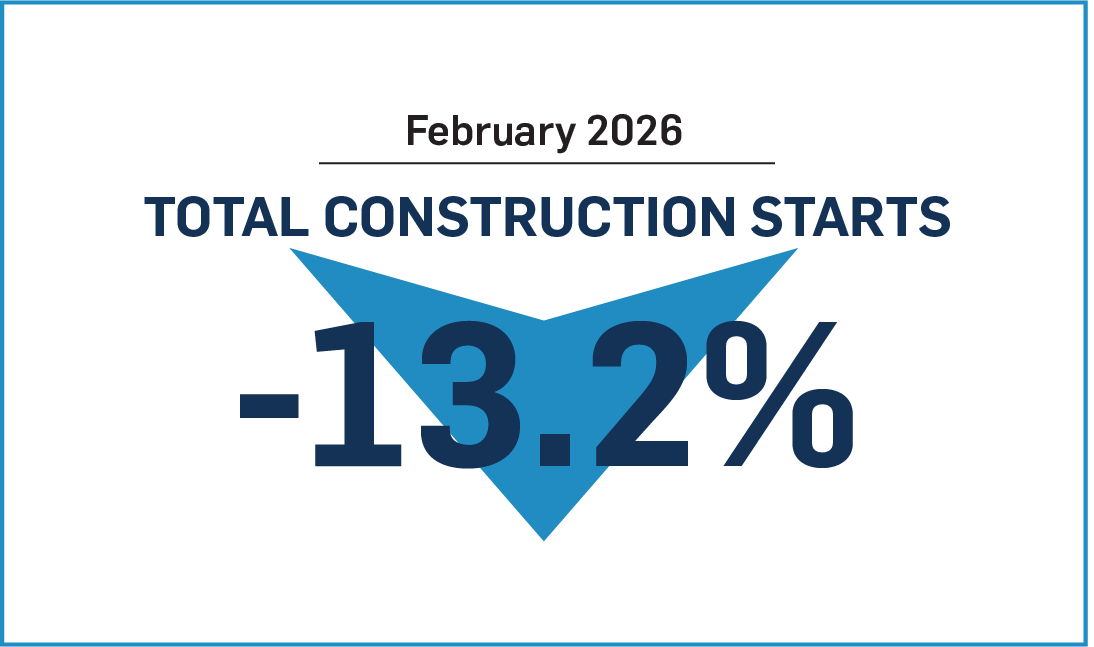
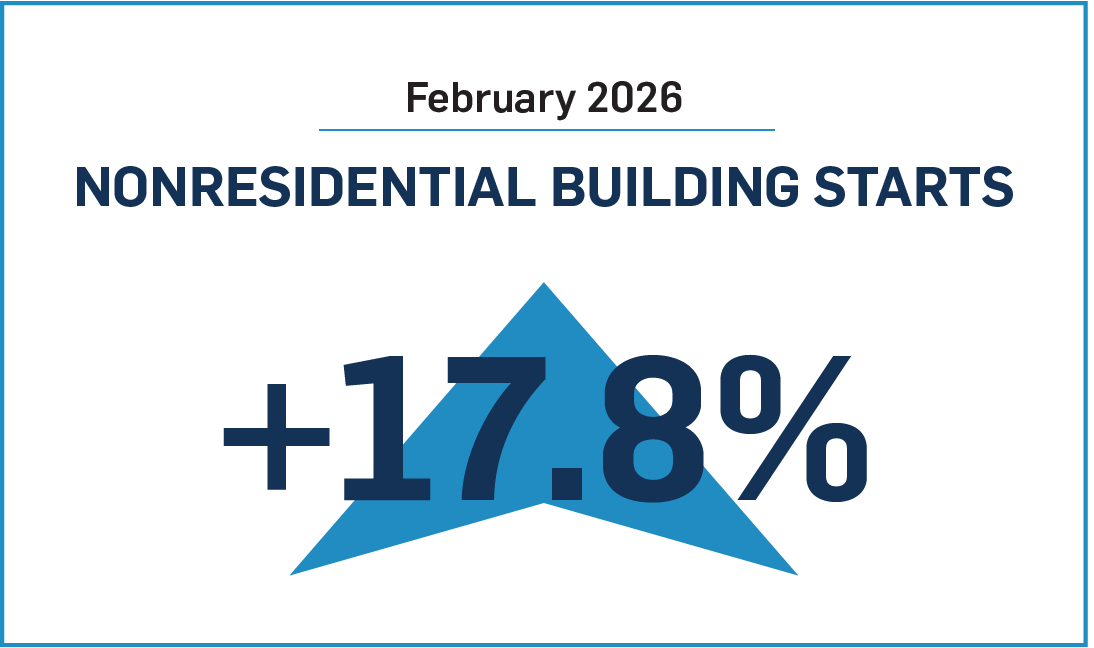
Looking at Construction Starts Data reinforces that uneven picture. Total construction starts declined in February 2026, even though nonresidential building starts rebounded during the same month, showing how quickly activity can shift by sector and project type.
Essential Projects Are Setting the Pace
The strongest construction demand is increasingly tied to long-term infrastructure, population growth, technology, energy, healthcare, and public-sector investment. Industry forecasts continue to show that demand remains solid but varies by region and sector, with high-growth areas such as data centers, manufacturing, and semiconductor facilities driving strong activity, particularly in the Southeast.
2. WHERE WE ARE
More Predictable Does Not Mean Less Expensive
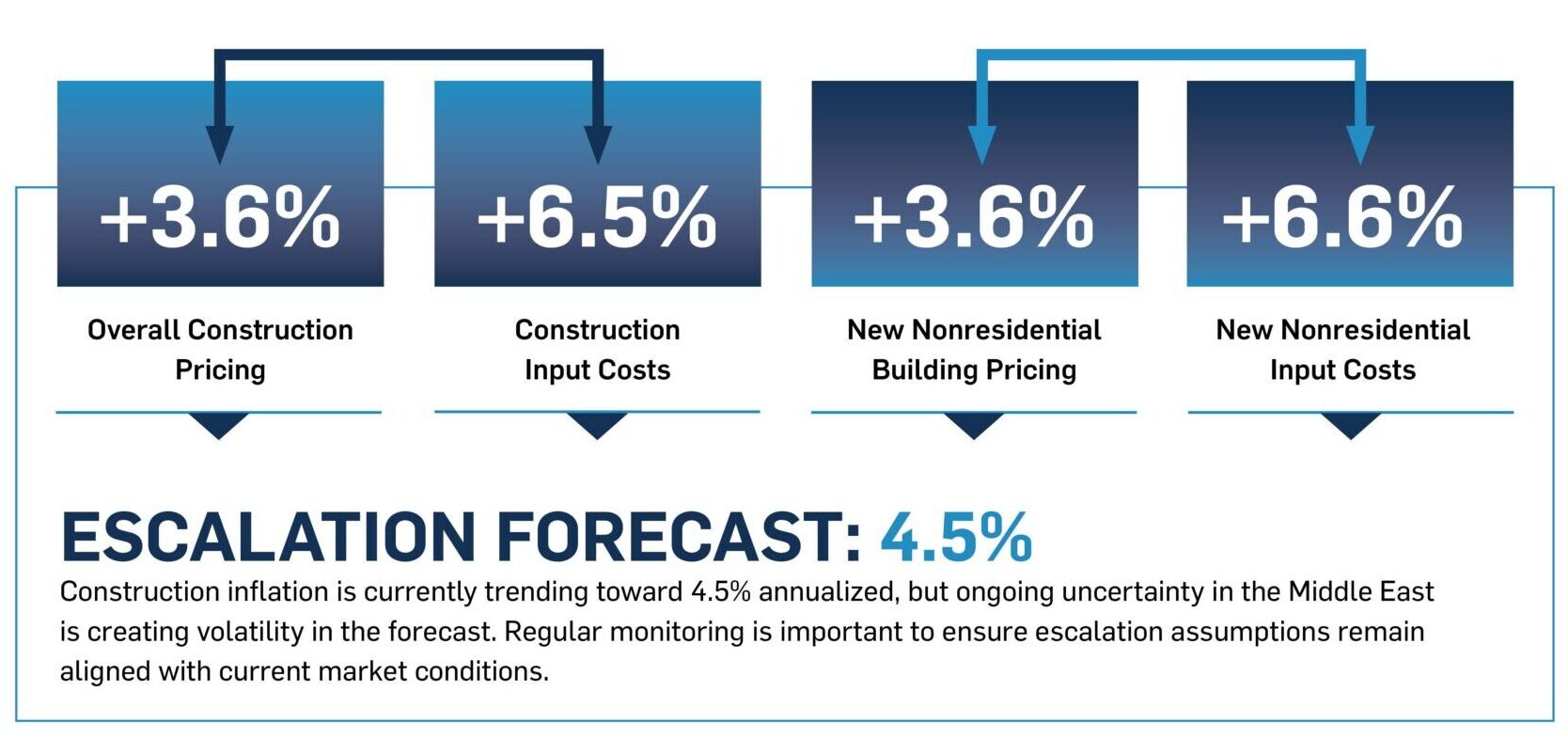
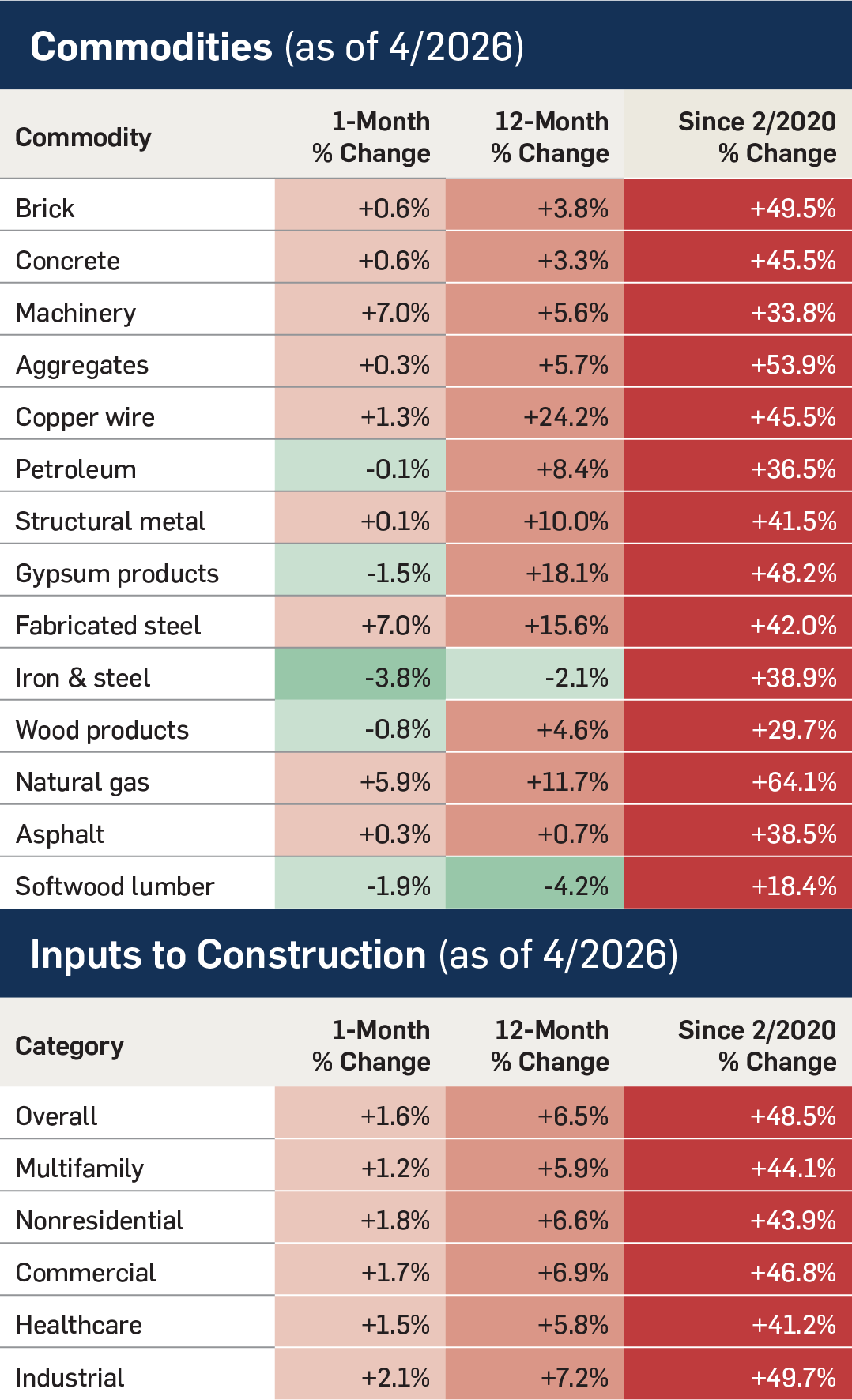
The market has become more predictable than it was during the peak disruption years, but recent data shows cost pressure is re-accelerating in key categories. AGC reported that inputs to new nonresidential construction rose 1.7% in April 2026 and 6.6% year over year, while the producer price index for new nonresidential building construction rose 3.6% over the same period. As illustrated below, that gap matters because input costs are rising faster than bid pricing, increasing pressure on project budgets.
The New Cost Watchlist
Earlier market outlooks focused heavily on broad material volatility. The current environment is more specific. Energy-related inputs, metals, freight, and electrical systems are now among the most important cost drivers
to watch.
AGC’s April 2026 analysis reported sharp year-over-year increases across several categories, including diesel fuel, asphalt, aluminum, copper and brass mill shapes, steel mill products, fabricated structural metals, and truck transportation of freight. The attached PPI table shows additional increases to note.
Labor Is Still the Schedule Setter
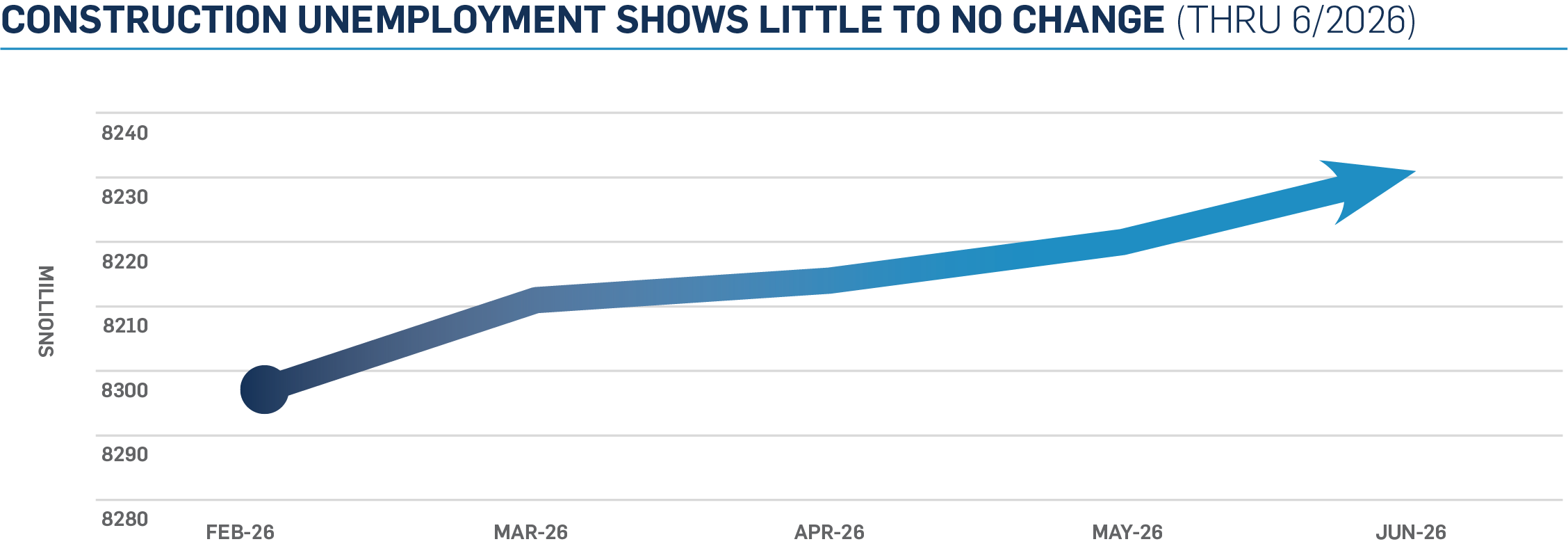
Even as materials draw renewed attention, labor remains one of the most important constraints in the construction market. ABC estimates that the construction industry will need to attract 349,000 net new workers in 2026 to meet demand, with another 456,000 workers needed in 2027 as spending growth is expected to resume.
The labor issue is not only about headcount. It is about the availability of experienced field leadership, project management, supervision, and skilled trade partners. The most active sectors are pulling from the same labor pool. The most active sectors are pulling from the same labor pool.
3. WHERE WE’RE HEADING
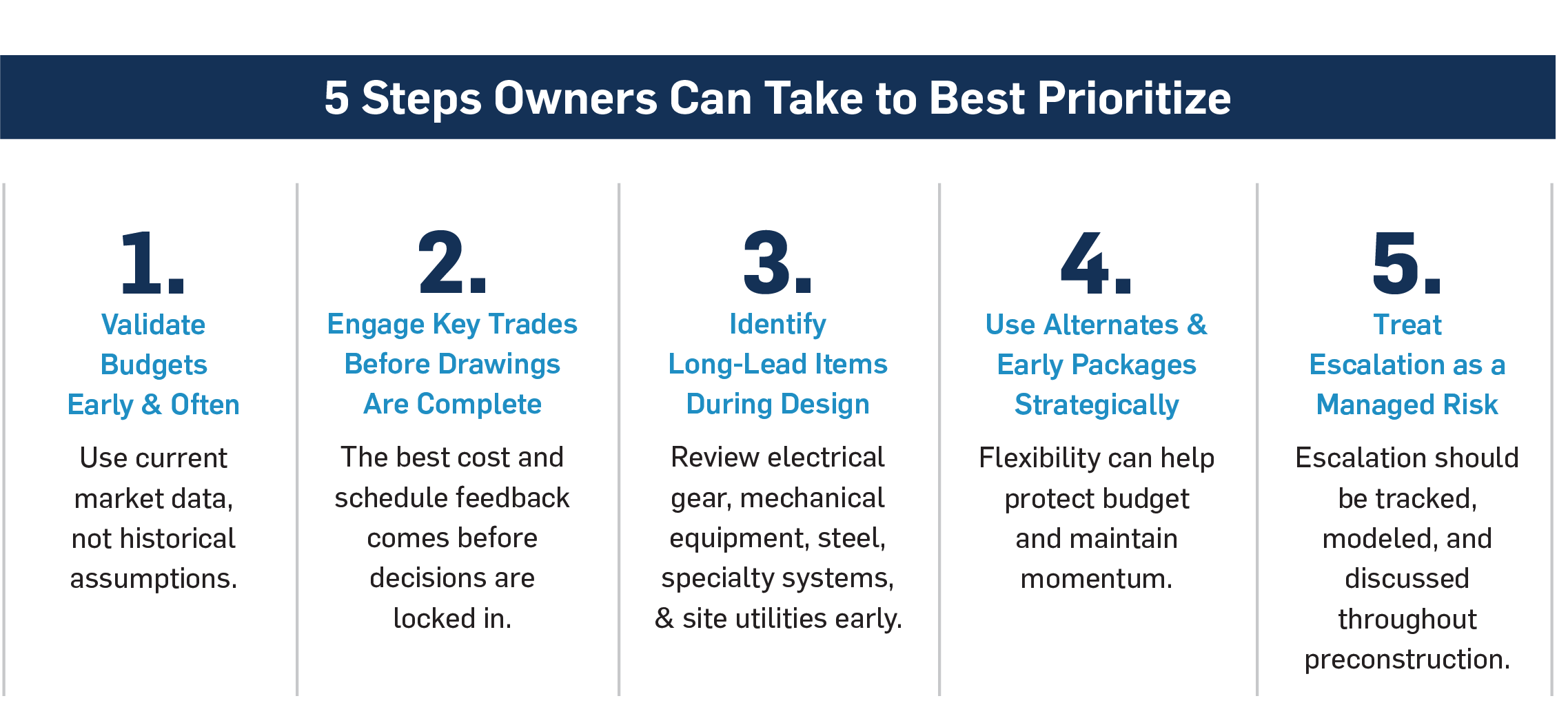
Early Alignment is the New Advantage
The market is not waiting for owners to catch up. Costs are moving, labor is tight, and the strongest trade partners are choosing projects that are organized, realistic, and ready to move.
ABC’s Construction Backlog Indicator rose to 9.1 months in May 2026, up from April and up from May 2025, even as contractor confidence slipped. That points to a market with real work in the pipeline, but also continued pressure around margins, labor, cost escalation, and risk.
Want to see future market updates? Subscribe to get notified of new articles, industry news, and more.

